February
The shortest month of the year punches well above its weight. Here’s why I always look forward to it.

I love February. Not because of roses or Valentine’s Day. And not because people are catching their breath after the holidays. I love February because it’s the month when personal memory and public history keep bumping into each other.
February holds a lot for such a short month. In the U.S., it’s Black History Month, which, as an American, helped shape how I think about inheritance, struggle, and the arc of unfinished work. In the Netherlands (mostly its Catholic south), it’s Carnival, which means cities briefly abandon their manners as people get colorful, loud, and unruly in very joyful ways.
For me, however, this month is when my private calendar lines up most clearly with the public one. Over time, this has encouraged me to notice how history doesn’t just live in books or museums or documentaries—but how it lives in ordinary life.
February is the month my parents got married. The month my wife and I got engaged. The month my wife’s father was born. It’s also the birth month of giants whose lives have hovered in my mind between history and fascination: Abraham Lincoln (who somehow pulled me into my first real job after college); Michael Jordan; George Harrison; and Charles Darwin. Even the deaths of Buddha and Michel de Montaigne make an appearance. All having lived entirely different lives, but all personifying waypoints, anchoring countless people and cultures to reflect on what matters most.
But what these dates share isn’t greatness. It’s closeness. Serendipitously, February has a way of bringing big stories closer to home.
I’ve come to think of it as a month that reveals how history actually works: the anniversaries you don’t plan—along with the habits, beliefs, practices, and stories lived or passed down quietly until they shape how you move through the world.
That’s how I think about my grandmother. She was born in February and passed away just two days before her 94th birthday—also in February.
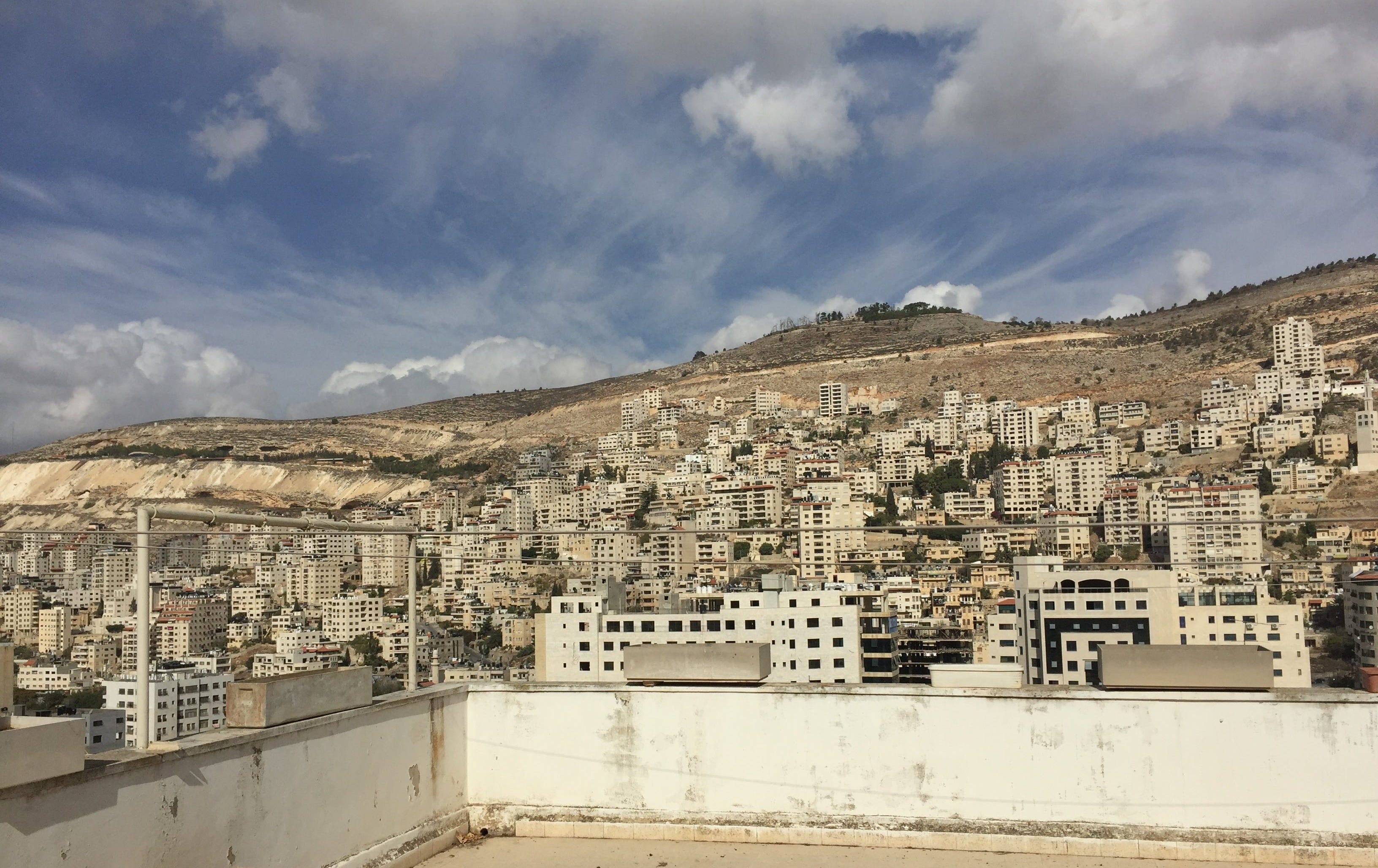
She spent most of her life in Nablus, a city often reduced to troubling headlines from afar. To her, however, it was simply home: a place of routines with mornings on the veranda, family and friends arriving unannounced, lunch gatherings that ignored time. Her home—built by my great-grandfather and expanded by my grandfather—looked out over the city in the valley below, with chirping birds, the five daily calls to prayer, and the roar of Israeli fighter jets ricocheting between the mountains.
Madinat Nablus carries these layers openly. Built in a valley, the Roman Neapolis, later arabicized into Nablus, is a city renowned for olive oil, soap, tahini, cheese, and of course, kanafeh. It’s a place distinctly Palestinian, where care and attention persist alongside struggle and resistance. That is Jabal an-Nar. A place where empires have visibly collided to produce a distinctively proud and confident population.
A minor case in point: I once shared with my grandmother that I hadn’t been sleeping well. I’d been tracking it on my Fitbit. With a clarity that felt less like advice and more like orientation, she waved it off. The reason “you’re not resting well,” she said, “is because you’re paying attention to that thing.” She couldn’t have been clearer: I was teaching my brain to outsource its sense of rest.
It was a small comment, but it came with a whole worldview attached: that attention shapes reality; that tools are helpful until they replace judgment; and that history, like health, lives in what you practice every day.
People like her rarely appear in official histories, yet they are how places live on and thrive. They carry memory through habit — what they cook, how they welcome family and neighbors, what they stand for, and what they refuse to let go of.
In our Gregorian calendar, February has become, for me, a reminder to pay attention to that scale of history: how figures and forces show up in domestic spaces, and how beliefs and inheritance travel less through speeches than through daily life and the folks who model it.
Every year, February reminds me that we understand the past by noticing where it touches our lives.
I admired my grandmother and the others mentioned above. They’re reason why I always look forward to this month. February feels like a time to reorient. It’s filled with ideas and people who showed us how to live.
— George Harrison, “Got My Mind Set on You”
32.2227° N, 35.2621° E